The Internet’s New Users Aren’t Human
For thirty years, the deal was simple: the internet provided the storefront, and you provided the labor. You searched. You compared. You clicked through ten tabs, filled the cart, typed your card number, and hoped the checkout page didn’t time out. Every online transaction ran on human effort.
That era is ending. Not because we stopped shopping, but because something else started shopping for us.
From errands to delegation
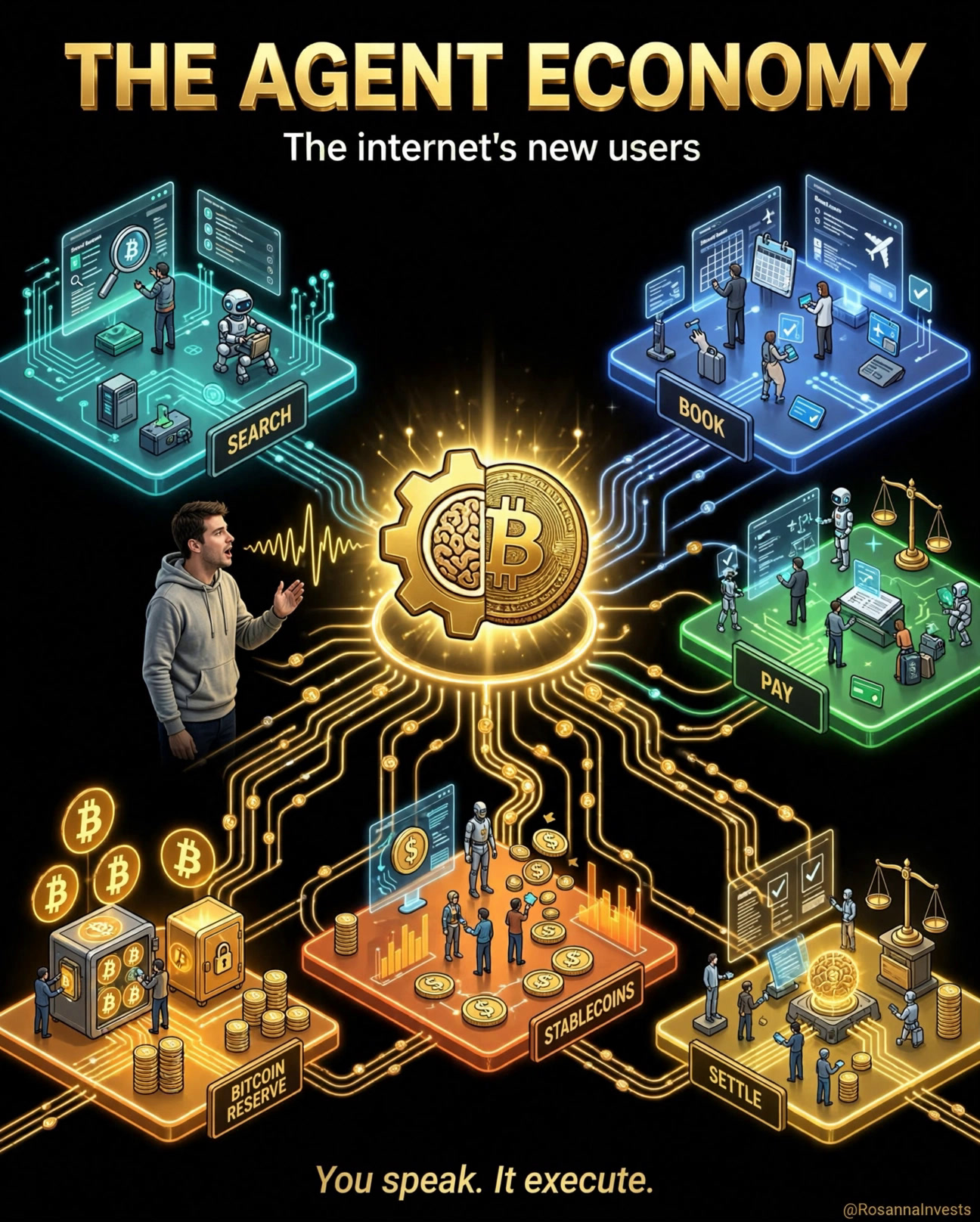
AI agents don’t browse the way we do. You tell one what you want, book the trip, restock the supplies, find the cheapest option that meets the spec, and it does the rest. It searches, compares, books, and pays. The internet stops being a place you visit to run errands and becomes something you delegate errands to.
This is the part most market commentary skips. Everyone prices the models. Almost nobody prices the plumbing.
Why tiny payments suddenly matter
Micropayments have failed for thirty years, and the reason was never technology. It was us. Every small charge was a small decision, and humans run out of decisions fast. Nobody wants to stop and approve a tenth of a cent for a single API call. Call it decision fatigue: the hidden tax on every transaction.
Software doesn’t pay that tax. An agent can make thousands of programmed payments, per API call, per millisecond of compute, per tool, per domain registration, per ad bid, without hesitation. For code, a payment isn’t a decision. It’s a line item.
When the buyer is software, the smallest payments become the most natural ones. That’s the unlock the last thirty years were missing.
Money has to move at machine speed
Here’s the problem: dollars sitting in bank accounts can’t do this. The old rails were built around human checkout, business hours, settlement delays, minimums designed for shopping carts, approvals designed for people.
So the stack is rebuilding itself underneath, in three layers:
- Stablecoins move the money: digital dollars that travel like data, globally, around the clock.
- Crypto networks clear it: settlement infrastructure that never closes.
- $BTC anchors it: the neutral reserve asset underneath the whole system. No issuer, no permission slip.
The specific rails I’m watching: $NEAR, $TAO, and $ZEC.
None of this requires a grand theory. It’s just what machine-speed commerce needs in order to function.
Where I’m watching
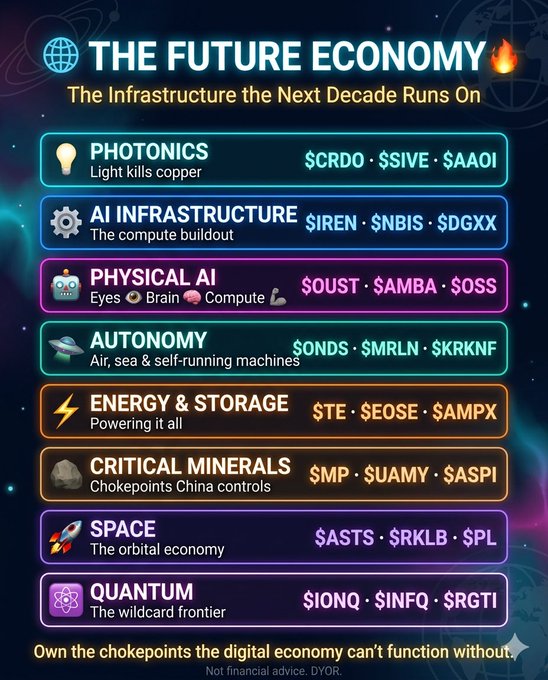
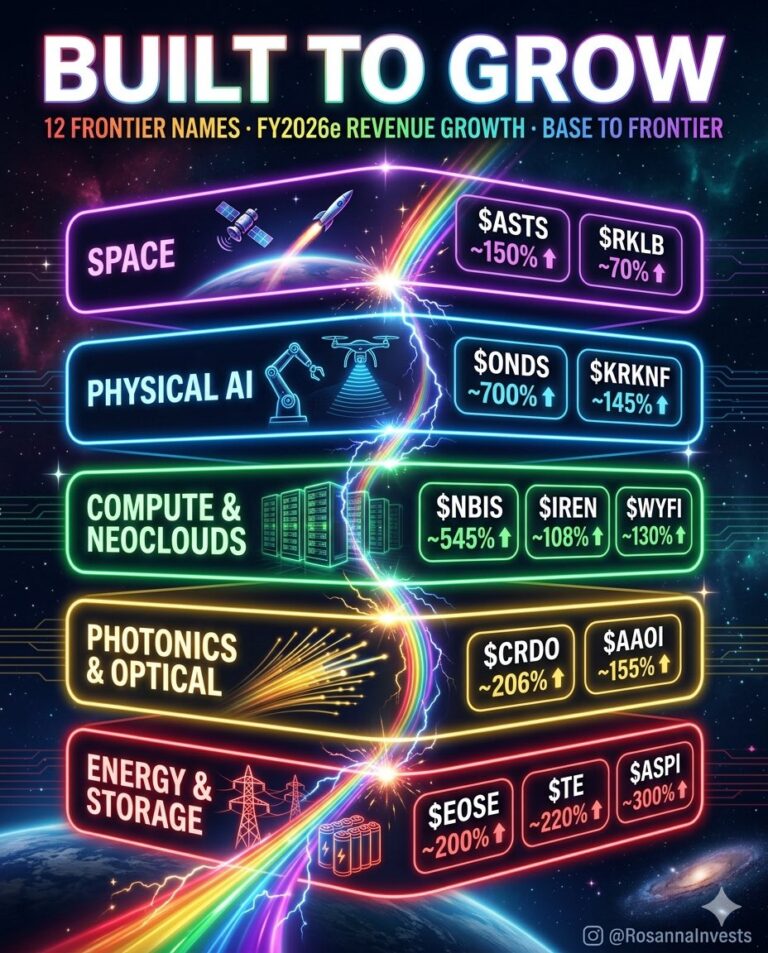
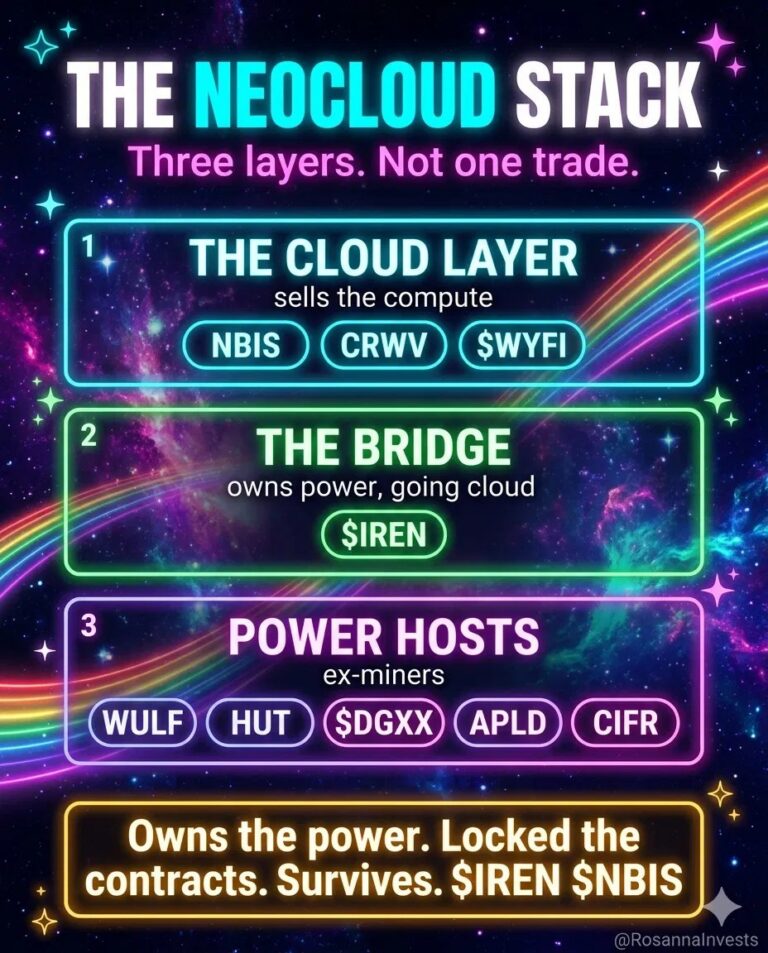
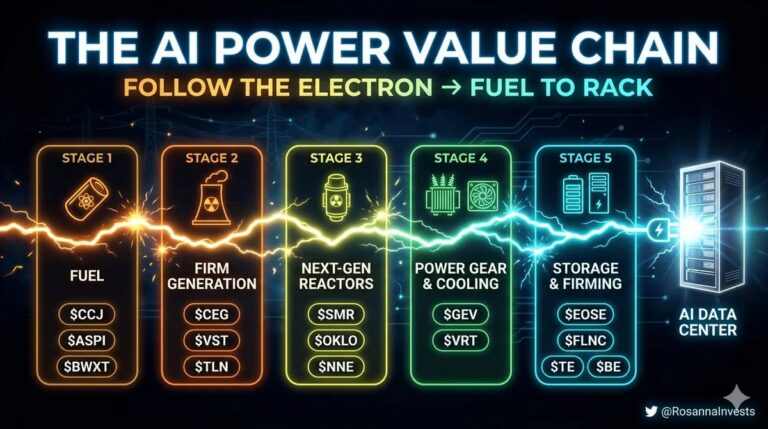
I think about this trade in legs. The first leg was physical: chips, data centers, memory, power. $MU sitting at the top of my watchlist was the tell, alongside $SNDK, $NVDA, $AMD, $DELL, $NBIS, and more. The market figured out early that AI is, among other things, a construction project. I made the same case for silver back in May: when intelligence needs this much electricity, the metals behind the grid stop being a commodity story and start being an infrastructure story.
The next leg is financial: the rails that millions of agent transactions will run on. $META’s push into AI-driven commerce is an early glimpse of the storefront side. The more interesting question is who owns the pipes.
The bottom line
The internet is shifting from something we use to something that acts for us. The winners of that shift won’t just be the smartest models. They’ll be the rails everything runs on: the payment layers, the settlement networks, and the reserve asset underneath.
I’m watching the rails.