Power Is the Layer You Can’t Fab
GPUs ship in months. Memory in a quarter. A substation takes years. When demand grows at the speed of software and supply grows at the speed of concrete, the shortage lands on electrons. Here’s who owns them.
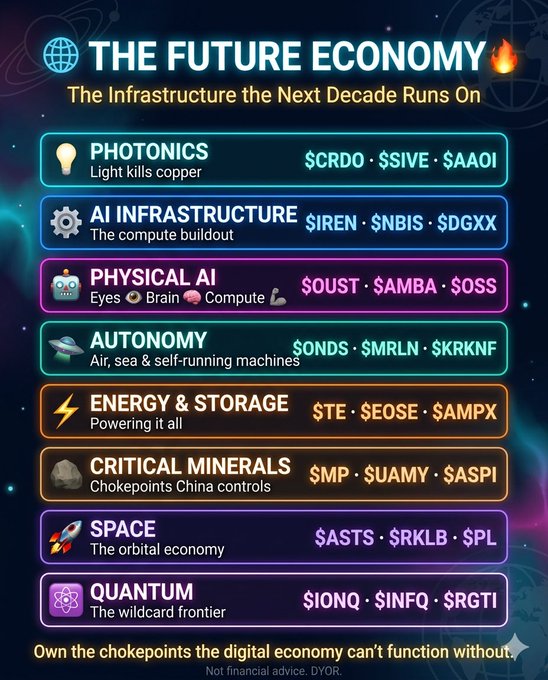
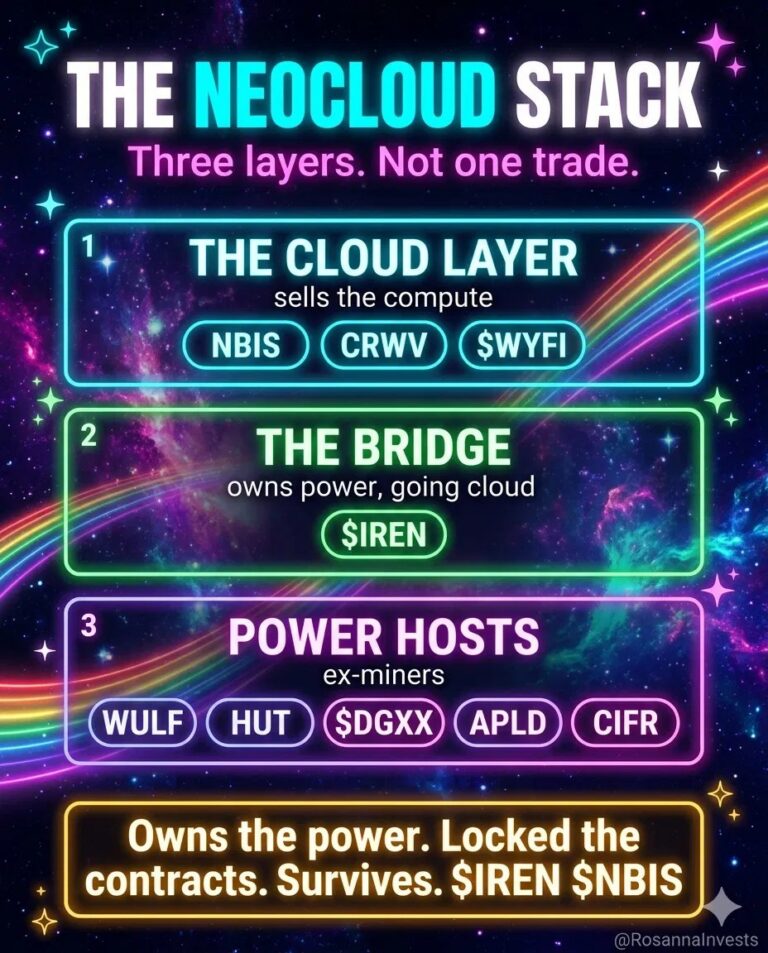
The operators own the megawatts and run compute on them: IREN, WULF, and CIFR. IREN sits on 5 GW of secured power. WULF is buying an actual generation station. CIFR locked electricity at 2.8 cents a kilowatt-hour. That’s the part of the AI trade that takes a decade to copy.
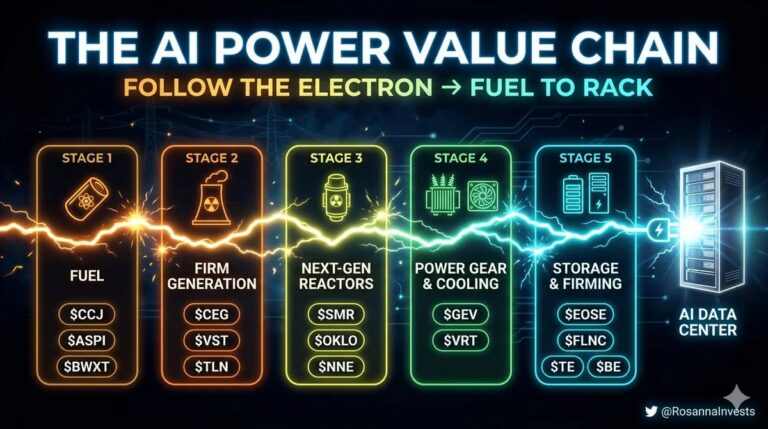
The generators sell the electrons to all of them: VST, TLN, and CEG. They don’t care which data center wins. Every megawatt of AI demand is their revenue. This is the quality way to own the shortage.
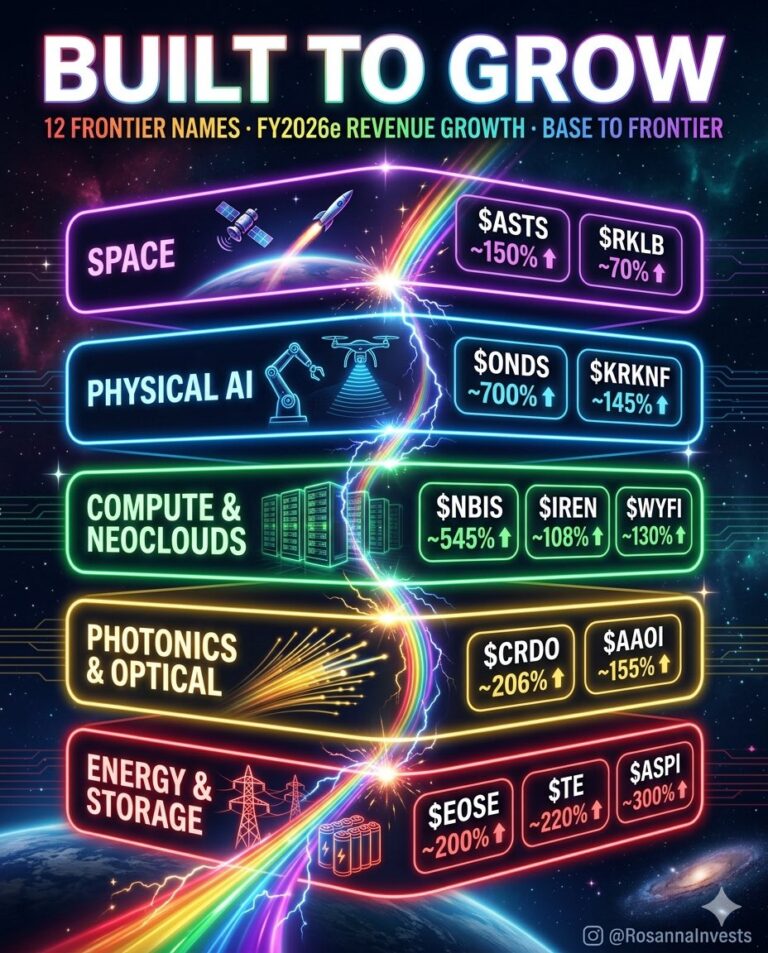
The workarounds skip the grid entirely: BE and EOSE. Fuel cells and storage work behind the meter. Turbines argue with zoning boards. Fuel cells don’t.
The blueprints bet on becoming operators: NUAI. Powered land in the Permian, gas behind the meter, and a gigawatt on paper. No tenant yet, no revenue yet. It has the highest torque on this map and the only line with nothing to verify but a plan.
The toll booths take a cut of every megawatt: VRT, ETN, and PWR. Cooling, switchgear, and transmission. Nobody builds a hall without paying them.
The next chapter fuels the next decade: CCJ, LEU, and OKLO. Uranium, enrichment, and reactors. Nuclear is the only baseload that scales with AI, and the fuel supply chain is where the next shortage forms.
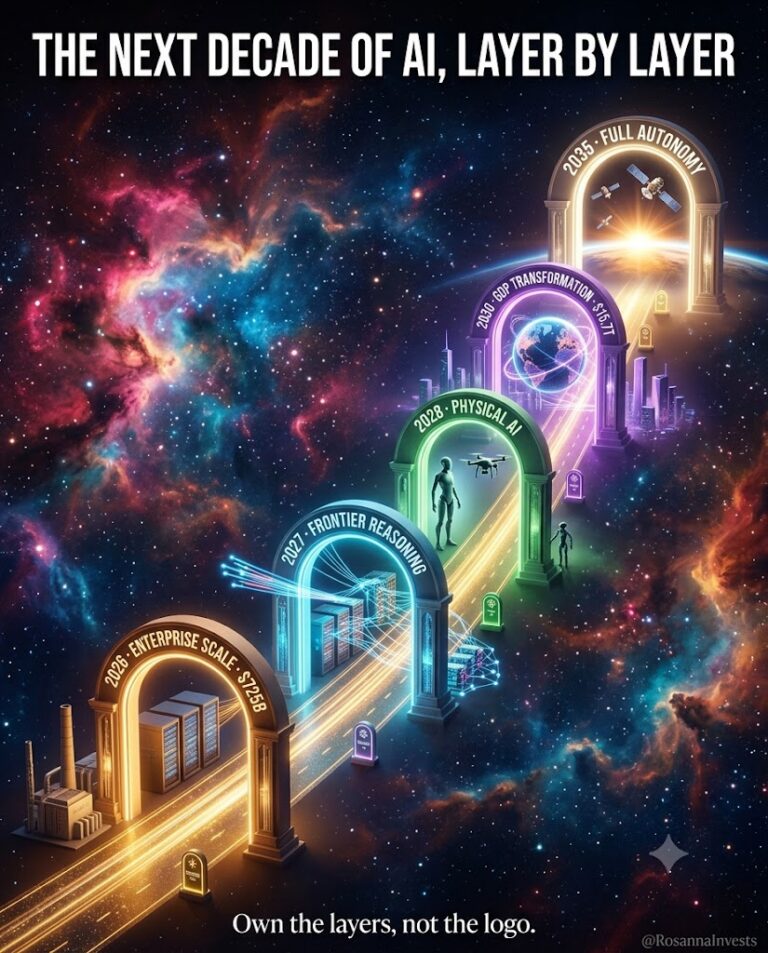
The whole buildout is constrained by electrons, not ambition. Nvidia can raise prices 15% and ship a new chip every year. Nobody can ship a substation.
Scarcity migrated from GPUs to memory. Power is next.