The AI Trade Just Became a Credit Trade
The AI buildout has crossed a financing line.
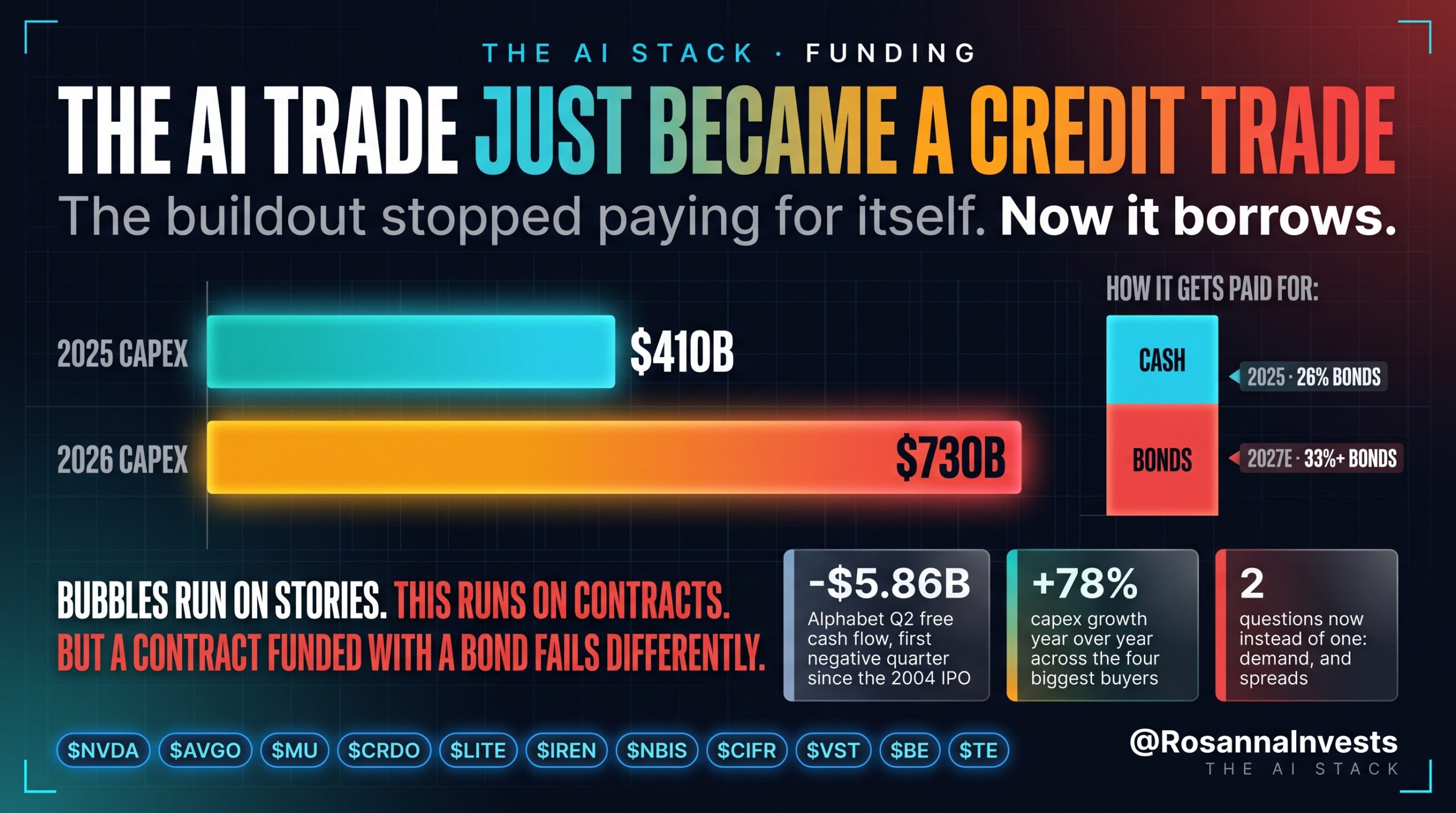
The four biggest buyers guided to roughly $730 billion of capex for 2026, up from about $410 billion in 2025. That is a 78% increase in the budget chasing the same scarce stack of chips, networking, power and sites.
But the important change is underneath the headline.
In Q2, Alphabet’s capex ran past its operating cash flow and free cash flow turned negative by $5.86 billionthe first negative quarter since its 2004 IPO. Goldman now estimates that hyperscalers will fund more than a third of 2027 capex with investment-grade bonds, versus about a quarter in 2025.
That reprices the whole map.
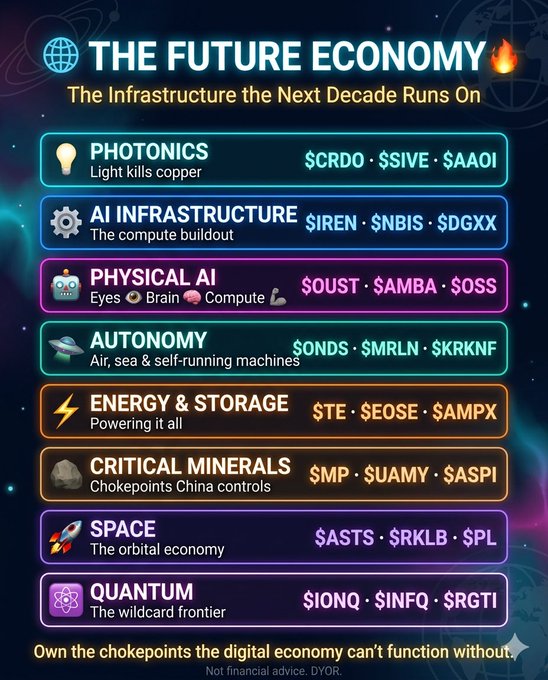
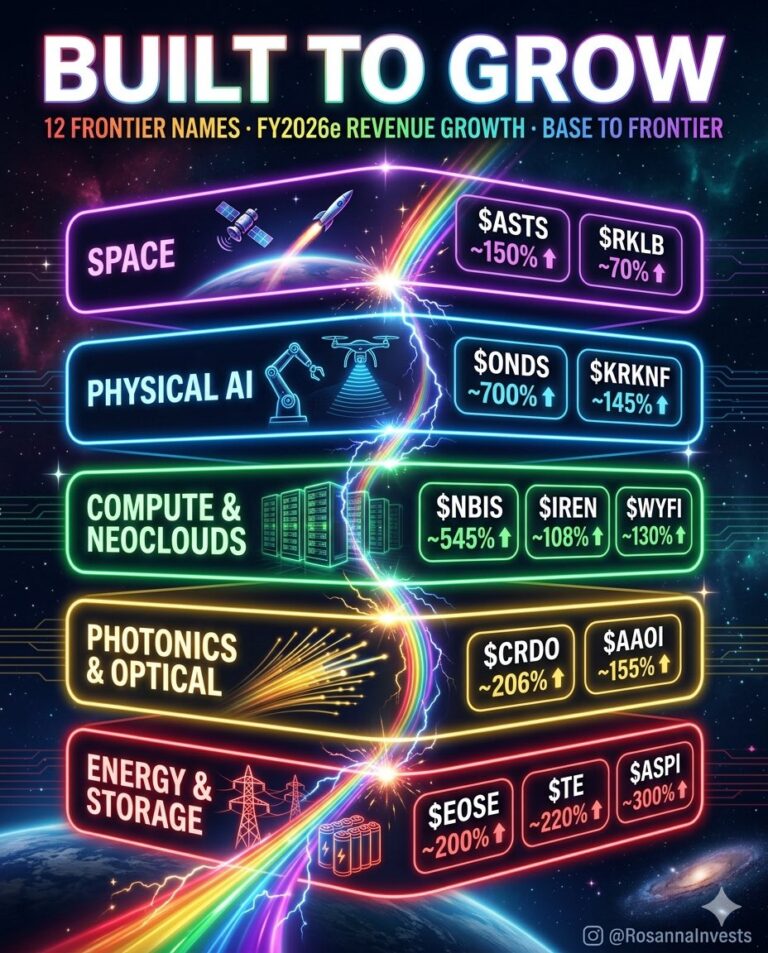
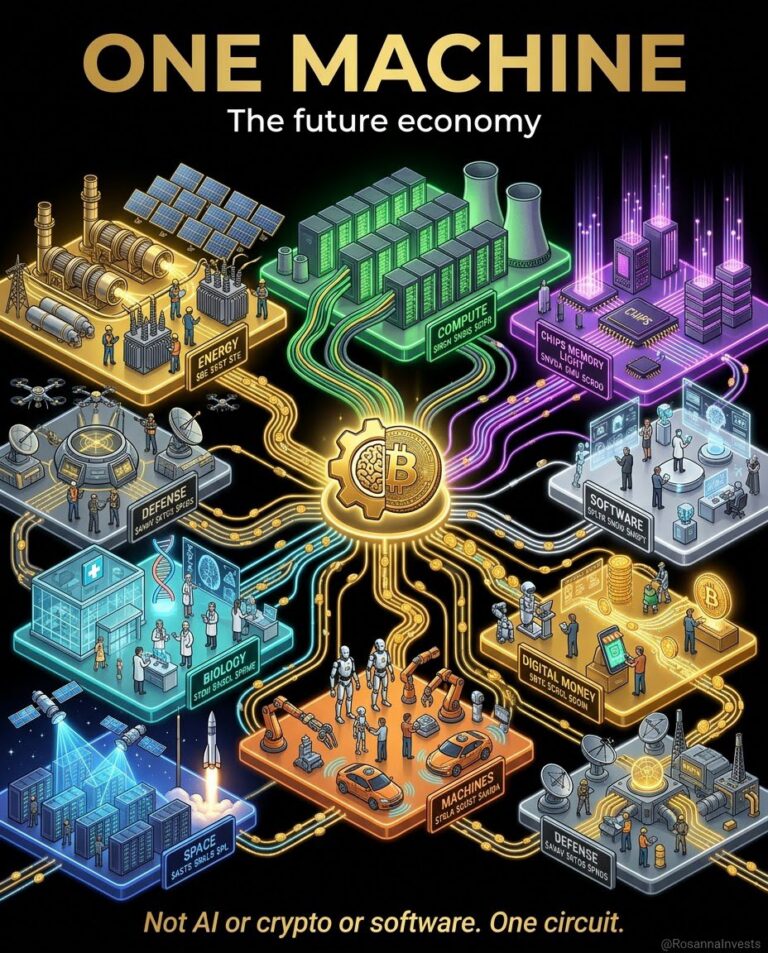
The companies selling into that budget are not all playing the same role. NVIDIA, Broadcom, Micron, Credo and Lumentum sell into the spending plan. IREN, Nebius and Cipher sign contracts against it. Vistra, Bloom Energy and TeraWulf get paid to power it.
When the buildout ran on cash flow, the central question was demand. Now there is a second question: how does the financing spread through the chain?
This is not the bubble argument. Bubbles run on stories, and this still runs on contracts. But a contract funded with a bond fails differently than a contract funded with cash. Credit conditions, refinancing windows and the investment-grade new-issue calendar now matter alongside the capex guide.
For investors, that creates a second dashboard. Track the backlog and utilization on the operating side. Then watch who is issuing debt, at what spread, and whether the promised capacity is arriving before the financing bill comes due.
The AI trade did not stop being an infrastructure story. It became a credit story, too.
Source: Rosanna Prestia, MBA (@RosannaInvests), September 19, 2026.